
Introduction
Waste management has become one of the biggest challenges in the modern world. With growing populations, increasing consumption, and rapid industrial development, traditional recycling methods are struggling to handle the amount and complexity of waste generated every day. This is where advanced technologies like Matarecycler are changing the way recycling works.
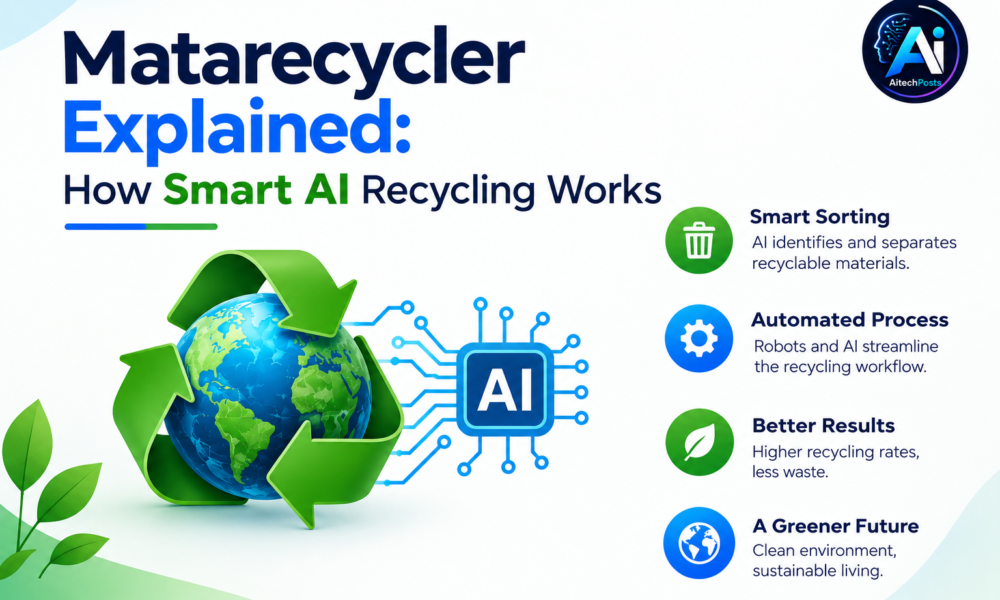
Matarecycler represents a new generation of smart recycling solutions that combine artificial intelligence, automation, and data-driven systems to improve waste sorting, material recovery, and recycling efficiency. Instead of depending only on manual labor, AI-powered recycling systems can identify different types of materials, separate recyclable items, and optimize recycling processes with greater speed and accuracy.
The concept behind Matarecycler is simple: use intelligent technology to make recycling smarter, faster, and more sustainable. By bringing artificial intelligence into waste management, systems like Matarecycler aim to reduce landfill waste, recover valuable resources, and create a cleaner environment.
In this article, we will explore what Matarecycler is, how smart AI recycling works, its technology, benefits, challenges, and how it could shape the future of sustainable waste management.
What Is Matarecycler?
Matarecycler is an AI-based recycling concept designed to improve the efficiency of waste identification, sorting, and processing. It uses advanced technologies such as machine learning, computer vision, sensors, and automation to analyze waste materials and determine how they should be handled.
Traditional recycling facilities often depend heavily on human workers who manually separate materials such as plastic, metal, paper, glass, and electronic waste. While human sorting plays an important role, it can be slow, expensive, and prone to mistakes, especially when dealing with large volumes of mixed waste.
Matarecycler introduces a smarter approach by allowing machines to recognize and categorize different materials automatically. Through AI algorithms, the system can learn from previous data and continuously improve its ability to identify recyclable materials.
The goal of Matarecycler is not only to recycle more waste but also to make the entire recycling process more accurate, cost-effective, and environmentally friendly.
How Does Matarecycler Use AI for Smart Recycling?
Artificial intelligence is the core technology behind Matarecycler. AI allows recycling systems to understand, analyze, and make decisions about waste materials in real time.
The process begins when waste enters the recycling facility. Cameras and sensors collect information about each item moving through the system. AI models then analyze different characteristics, including:
- Shape and size of objects
- Color and texture
- Material composition
- Weight and density
- Surface patterns
Using this information, the AI system determines whether an item is plastic, metal, paper, glass, or another material category.
For example, a plastic bottle moving on a conveyor belt can be detected by computer vision technology. The AI identifies its material type and sends instructions to automated sorting equipment to separate it from other waste.
Over time, Matarecycler systems become more accurate because machine learning models continue improving based on new information and recycling data.
The Step-by-Step Process of Matarecycler Technology
Understanding how Matarecycler works becomes easier by looking at the complete recycling process.
1. Waste Collection and Entry
The recycling journey begins when collected waste arrives at a processing facility. Different types of materials may be mixed, including household waste, packaging materials, and industrial waste.
Before AI processing begins, large unwanted objects are removed to prepare the waste stream.
2. Smart Scanning and Material Detection
After preparation, waste moves through advanced scanning areas equipped with cameras and sensors.
Matarecycler technology analyzes each item using artificial intelligence. Computer vision systems recognize patterns and identify materials within seconds.
Unlike traditional manual sorting, AI can process thousands of items quickly while maintaining consistent accuracy.
3. Automated Waste Sorting
Once materials are identified, automated systems separate them into different categories.
Robotic arms, air-based sorting systems, and mechanical separators can move recyclable items into dedicated collection areas.
For example:
- Plastic containers can be separated from other materials.
- Metals can be detected and collected.
- Paper products can be grouped.
- Contaminated materials can be removed.
This automated sorting process increases the amount of recyclable material recovered from waste.
4. Data Analysis and Process Optimization
One of the biggest advantages of Matarecycler is its ability to collect and analyze recycling data.
AI systems monitor:
- Recycling volume
- Material recovery rates
- Sorting accuracy
- Equipment performance
- Waste patterns
This information helps facilities improve their operations and reduce unnecessary waste.
Key Technologies Behind Matarecycler
Matarecycler combines multiple technologies to create an intelligent recycling ecosystem.
Artificial Intelligence and Machine Learning
AI allows recycling systems to recognize patterns and make decisions. Machine learning models become better over time as they process more examples of different materials.
This helps improve sorting accuracy and reduces human error.
Computer Vision Technology
Computer vision works like the “eyes” of the recycling system. Cameras capture images of waste items, and AI analyzes these images to identify their characteristics.
Advanced vision systems can recognize materials even when objects are damaged, dirty, or partially covered.
Robotics and Automation
Robotic systems help perform physical sorting tasks that were previously done manually.
Automation allows recycling facilities to operate continuously while improving speed and efficiency.
Smart Sensors
Sensors provide additional information about waste materials. They can detect properties such as weight, chemical composition, and material density.
Combining sensor data with AI creates a more complete understanding of each waste item.
Benefits of Matarecycler and AI Recycling Systems
Smart recycling technology offers several important advantages compared to traditional recycling methods.
Improved Recycling Accuracy
One of the biggest benefits of Matarecycler is improved material identification. AI systems can separate materials with greater precision, reducing contamination between recycling categories.
Cleaner recycled materials have higher value and can be reused more effectively.
Faster Waste Processing
Traditional sorting methods can take significant time because workers must manually inspect and separate materials.
Matarecycler automates many of these tasks, allowing recycling facilities to process larger quantities of waste in less time.
Reduced Landfill Waste
When recyclable materials are accurately recovered, fewer resources end up in landfills.
This helps reduce environmental pollution and supports more sustainable waste management practices.
Lower Operational Costs
Although AI recycling systems require initial investment, automation can reduce long-term operational expenses by improving efficiency and reducing dependency on manual sorting.
Better Resource Recovery
Many valuable materials are lost because traditional systems cannot identify or recover them effectively.
Matarecycler helps recover more useful resources, including metals, plastics, and other recyclable materials.
Matarecycler vs Traditional Recycling Methods
Traditional recycling depends mainly on manual labor and basic mechanical systems. While these methods have been useful for decades, they face several limitations.
Manual sorting can be affected by worker fatigue, inconsistent decisions, and limited processing capacity.
In comparison, Matarecycler uses AI-powered systems that can work continuously and analyze materials at high speed.
Traditional recycling:
- Requires more human involvement
- Has slower processing speeds
- May produce higher contamination rates
- Can struggle with complex waste streams
AI-based recycling with Matarecycler:
- Provides automated material recognition
- Improves sorting accuracy
- Handles larger waste volumes
- Generates useful recycling data
The combination of human expertise and artificial intelligence can create a more efficient recycling ecosystem.
The Role of AI in the Future of Recycling
Artificial intelligence is expected to play a major role in the future of waste management. As cities produce more waste, smarter solutions will become increasingly important.
Future AI recycling systems may include:
- Fully automated recycling facilities
- Real-time waste tracking
- Predictive maintenance for equipment
- Improved material recognition
- Smart waste collection systems
Technologies like Matarecycler demonstrate how AI can help industries move toward a circular economy, where materials are reused instead of continuously discarded.
Challenges of AI Recycling Technology
Although Matarecycler and similar AI recycling solutions offer many advantages, some challenges remain.
High Initial Investment
Setting up AI-powered recycling facilities requires advanced equipment, software, and infrastructure. Smaller recycling organizations may find the initial cost challenging.
Complex Waste Materials
Some waste products contain multiple materials combined, making identification more difficult.
For example, certain packaging products may include plastic, metal, and paper layers that require advanced processing techniques.
Need for Continuous Improvement
AI systems require regular updates and training data to maintain accuracy. As new products and materials appear, recycling technology must continue adapting.
Why Matarecycler Matters for Sustainable Development
The world needs better solutions for managing waste, conserving resources, and reducing environmental damage.
Matarecycler represents the shift from traditional recycling toward intelligent, technology-driven waste management.
By using AI, automation, and smart data analysis, recycling facilities can recover more materials, reduce waste, and improve sustainability.
The importance of technologies like Matarecycler goes beyond recycling alone. It supports a larger vision where resources are reused efficiently, and waste generation is minimized.
Future Scope of Matarecycler Technology
The future of Matarecycler and AI recycling looks promising as technology continues to develop.
Possible advancements may include:
- More accurate AI material recognition
- Advanced recycling robots
- Integration with smart city systems
- Real-time recycling monitoring
- Automated waste collection networks
As environmental concerns increase globally, smart recycling technology will become an essential part of sustainable infrastructure.
Conclusion
Matarecycler represents the future of smart recycling by combining artificial intelligence, automation, and advanced data analysis to improve waste management. Unlike traditional recycling methods that rely heavily on manual sorting, AI-powered systems can identify materials faster, improve accuracy, and recover more valuable resources.
Through technologies such as machine learning, computer vision, robotics, and smart sensors, Matarecycler helps create a more efficient and sustainable recycling process.
As the world continues to face waste management challenges, solutions based on artificial intelligence will become increasingly important. Smart recycling systems like Matarecycler show how technology can transform waste into valuable resources while supporting a cleaner and more sustainable future.
Frequently Asked Questions (FAQs)
Q1: What is Matarecycler?
A: Matarecycler is an AI-powered smart recycling concept that uses artificial intelligence, sensors, and automation to identify, sort, and process recyclable materials more efficiently.
Q2: How does Matarecycler use artificial intelligence?
A: Matarecycler uses AI algorithms and computer vision technology to analyze waste materials, recognize different objects, and automatically separate recyclable items.
Q3: Is Matarecycler better than traditional recycling?
A: Matarecycler improves traditional recycling by increasing sorting accuracy, processing speed, and material recovery through automation and artificial intelligence.
Q4: What technologies are used in Matarecycler?
A: Matarecycler uses technologies such as machine learning, computer vision, robotics, smart sensors, and automated sorting systems.
Q5: Can AI recycling reduce landfill waste?
A: Yes, AI recycling systems can help reduce landfill waste by improving the recovery and reuse of recyclable materials.
Q6: What is the future of AI recycling?
A: The future of AI recycling includes fully automated recycling facilities, smarter waste management systems, and improved resource recovery through advanced technology.
No Comment! Be the first one.