






Synaptica Robotics: Technology, Applications, and How It Works
Introduction: Understanding Synaptica Robotics Robotics technology is rapidly transforming industries by combining artificial intelligence, automation, machine learning, and advanced engineering....

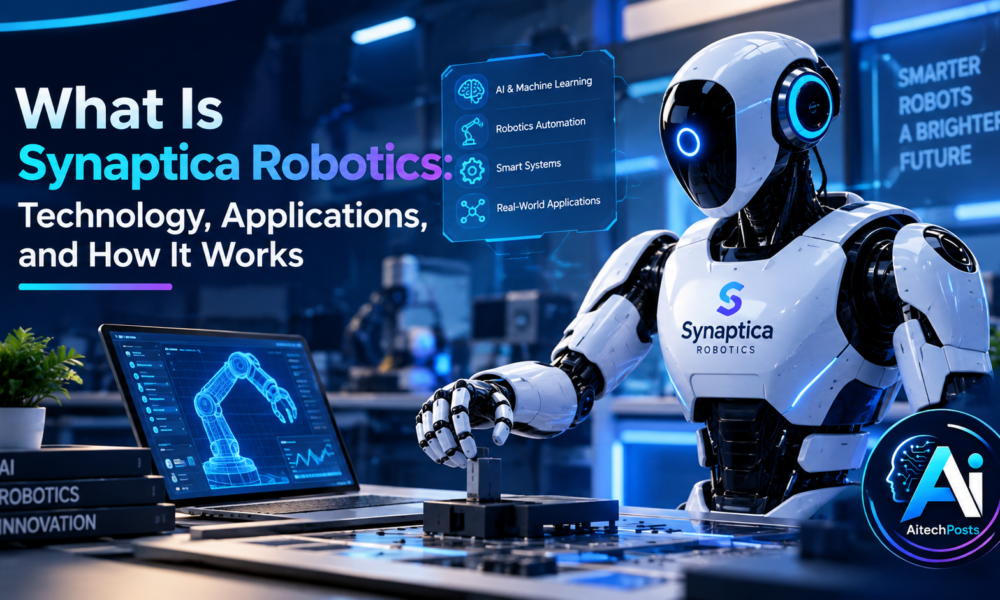
Introduction: Understanding Synaptica Robotics
Robotics technology is rapidly transforming industries by combining artificial intelligence, automation, machine learning, and advanced engineering. From manufacturing and healthcare to logistics and research, robots are becoming increasingly capable of performing complex tasks with greater accuracy and efficiency.
Table Of Content
- Introduction: Understanding Synaptica Robotics
- 1. Data Collection Through Sensors
- 2. Artificial Intelligence Processing
- 3. Decision Making and Control
- 4. Physical Action Execution
- Artificial Intelligence and Machine Learning
- Computer Vision
- Advanced Sensors
- Robotics Automation Software
- Increased Efficiency
- Improved Accuracy
- Enhanced Safety
- Cost Optimization
- Continuous Operation
- High Implementation Costs
- Technical Complexity
- Human-Robot Interaction
- Q1: What is Synaptica Robotics?
- Q2: How does Synaptica Robotics work?
- Q3: Where is Synaptica Robotics used?
- Q4: What technologies power Synaptica Robotics?
- Q5: Why is robotics technology important?
Synaptica Robotics represents the evolution of intelligent robotic systems designed to improve automation through advanced sensing, decision-making capabilities, and adaptive technologies. By combining robotics with artificial intelligence, Synaptica Robotics focuses on creating machines that can understand environments, process information, and perform tasks with minimal human intervention.
This complete guide explains what Synaptica Robotics is, how Synaptica Robotics technology works, its key features, applications, benefits, and the future possibilities of intelligent robotic systems.
What Is Synaptica Robotics?
Synaptica Robotics refers to a modern approach to robotics that integrates intelligent software, automation technologies, sensors, and artificial intelligence to create advanced robotic solutions.
Unlike traditional robots that mainly perform repetitive programmed tasks, intelligent robotics systems are designed to analyze surroundings, adapt to changing conditions, and make decisions based on real-time information.
The core idea behind Synaptica Robotics is creating smarter machines that can interact with humans, understand complex environments, and improve operational efficiency across different industries.
Modern robotics combines several technologies, including:
- Artificial intelligence (AI)
- Machine learning
- Computer vision
- Sensor technology
- Motion control systems
- Data processing
- Automation software
Together, these technologies allow robotic systems to perform tasks that previously required significant human effort.
How Does Synaptica Robotics Work?
The working process of Synaptica Robotics involves multiple interconnected technologies that allow robots to sense, analyze, and respond to their environment.
The basic operation can be divided into several stages.
1. Data Collection Through Sensors
Robotic systems use different types of sensors to collect information from their surroundings.
Sensors act like the robot’s perception system by detecting:
- Objects
- Movement
- Distance
- Temperature
- Pressure
- Environmental changes
Common sensors used in advanced robotics include cameras, LiDAR systems, ultrasonic sensors, and motion detectors.
The collected information helps the robot understand its environment and perform tasks accurately.
2. Artificial Intelligence Processing
After collecting data, the robotic system processes the information using artificial intelligence algorithms.
AI allows robots to:
- Recognize patterns
- Identify objects
- Make decisions
- Learn from previous actions
- Improve performance over time
Machine learning models help robotic systems become more efficient by analyzing data and adapting their behavior.
3. Decision Making and Control
Once the system understands the environment, it determines the appropriate action.
For example, an intelligent robot in a warehouse may analyze:
- Product location
- Inventory information
- Movement paths
- Safety conditions
Based on this information, the robot decides the best way to complete a task.
4. Physical Action Execution
After making decisions, robotic systems use motors, actuators, and mechanical components to perform physical actions.
These actions may include:
- Moving objects
- Navigating spaces
- Assembling products
- Performing inspections
- Assisting humans
The combination of intelligent software and physical hardware allows Synaptica Robotics systems to complete complex operations.
Key Technologies Behind Synaptica Robotics
Artificial Intelligence and Machine Learning
Artificial intelligence is one of the most important components of modern robotics.
AI enables robots to analyze information and perform tasks that require decision-making abilities.
Machine learning improves robotic performance by allowing systems to learn from collected data rather than depending only on fixed programming.
Computer Vision
Computer vision allows robots to understand visual information from cameras and imaging systems.
With computer vision technology, robots can:
- Detect objects
- Recognize shapes
- Identify movement
- Navigate environments
- Perform quality inspections
This technology is especially important in manufacturing, healthcare, and autonomous systems.
Advanced Sensors
Sensors provide robots with awareness of their surroundings.
Advanced sensor systems help robots operate safely by detecting obstacles, measuring distances, and understanding environmental conditions.
Robotics Automation Software
Software platforms control robotic operations by connecting hardware components with intelligent algorithms.
Robotics software manages:
- Movement planning
- Data analysis
- Communication
- Task execution
- System monitoring
Applications of Synaptica Robotics
The applications of Synaptica Robotics extend across multiple industries. Intelligent robotic systems are helping organizations improve productivity, accuracy, and safety.
1. Manufacturing and Industrial Automation
Manufacturing is one of the biggest areas where robotics technology is used.
Synaptica Robotics solutions can support:
- Assembly operations
- Product inspection
- Material handling
- Packaging
- Quality control
Robots can perform repetitive tasks with high precision while reducing operational errors.
In modern factories, intelligent robots work alongside human employees to improve efficiency rather than completely replacing human involvement.
2. Healthcare and Medical Robotics
Healthcare is another important field benefiting from advanced robotics.
Robotic technologies can assist with:
- Medical procedures
- Patient assistance
- Rehabilitation
- Laboratory automation
- Healthcare logistics
Robots can improve accuracy and support healthcare professionals by handling precise or repetitive activities.
3. Logistics and Warehousing
The growth of online shopping has increased demand for automated warehouse solutions.
Synaptica Robotics can help businesses manage:
- Inventory movement
- Package sorting
- Warehouse navigation
- Order fulfillment
Intelligent robots can optimize warehouse operations by identifying efficient routes and reducing manual workload.
4. Agriculture and Smart Farming
Agriculture is adopting robotics to improve productivity and resource management.
Robotic systems can assist with:
- Crop monitoring
- Automated harvesting
- Plant analysis
- Field inspection
By using sensors and AI, robots can collect valuable information that helps farmers make better decisions.
5. Research and Exploration
Robotics plays an important role in environments where human access is difficult or dangerous.
Applications include:
- Space exploration
- Underwater research
- Disaster response
- Scientific experiments
Intelligent robots can operate in extreme conditions while collecting important data.
Benefits of Synaptica Robotics
Increased Efficiency
Robotic systems can complete tasks faster and more consistently compared to manual processes.
Automation helps organizations improve productivity while maintaining quality standards.
Improved Accuracy
Robots can perform highly precise operations, making them valuable in industries where small errors can create major problems.
Examples include:
- Electronics manufacturing
- Medical applications
- Laboratory processes
Enhanced Safety
Robots can perform dangerous tasks in environments involving:
- Heavy machinery
- Hazardous materials
- Extreme temperatures
- Unsafe locations
This helps reduce risks for human workers.
Cost Optimization
Although robotic implementation requires investment, automation can reduce long-term operational costs by improving efficiency and reducing errors.
Continuous Operation
Many robotic systems can operate continuously with scheduled maintenance, allowing businesses to increase production capacity.
Challenges of Synaptica Robotics
Despite its advantages, robotics technology also faces several challenges.
High Implementation Costs
Developing and deploying advanced robotic systems can require significant investment.
Organizations must consider:
- Equipment costs
- Software development
- Maintenance
- Training
Technical Complexity
Advanced robotics requires expertise in multiple areas, including:
- Engineering
- Programming
- Artificial intelligence
- Data analysis
Human-Robot Interaction
Creating safe and effective communication between humans and robots remains an important area of development.
Robots need to understand human actions and operate safely in shared environments.
The Future of Synaptica Robotics
The future of Synaptica Robotics is closely connected with advancements in artificial intelligence, automation, and machine learning.
Future robotic systems are expected to become:
- More intelligent
- More adaptive
- More autonomous
- Easier to operate
AI improvements will allow robots to handle increasingly complex tasks while collaborating more effectively with humans.
Industries are likely to continue adopting intelligent robotics to improve productivity, reduce risks, and create new opportunities.
Frequently Asked Questions About Synaptica Robotics
Q1: What is Synaptica Robotics?
A: Synaptica Robotics refers to intelligent robotic technology that combines artificial intelligence, sensors, automation, and advanced engineering to create smarter robotic systems.
Q2: How does Synaptica Robotics work?
A: Synaptica Robotics works by collecting environmental data through sensors, processing information using AI algorithms, making decisions, and performing physical actions through robotic components.
Q3: Where is Synaptica Robotics used?
A: Synaptica Robotics can be applied in industries such as manufacturing, healthcare, logistics, agriculture, research, and automation.
Q4: What technologies power Synaptica Robotics?
A: Key technologies include artificial intelligence, machine learning, computer vision, sensors, automation software, and robotic control systems.
Q5: Why is robotics technology important?
A: Robotics technology helps organizations improve efficiency, accuracy, safety, and productivity by automating complex tasks.
Conclusion: The Growing Impact of Synaptica Robotics
Synaptica Robotics represents the future of intelligent automation by combining robotics, artificial intelligence, and advanced technologies to create smarter machines.
From factories and hospitals to warehouses and research facilities, intelligent robotic systems are changing how industries operate. By improving efficiency, accuracy, and safety, Synaptica Robotics demonstrates how automation can support businesses and human workers.
As technology continues to advance, robotics will become increasingly connected, intelligent, and capable of solving complex real-world challenges. The development of systems like Synaptica Robotics highlights the growing importance of intelligent machines in shaping the future of automation.








No Comment! Be the first one.