





Common Phishing Attacks: Types, Signs, and Prevention Tips
Introduction common phishing attacks! The internet has transformed the way people communicate, shop, work, and manage their personal information. However, as digital activities continue to grow,...

Introduction
common phishing attacks! The internet has transformed the way people communicate, shop, work, and manage their personal information. However, as digital activities continue to grow, cyber threats are also becoming more advanced. Among the most common online security threats, phishing attacks remain one of the biggest challenges for individuals, businesses, and organizations worldwide.
Table Of Content
- Introduction
- 1. Email Phishing Attacks
- 2. Spear Phishing Attacks
- 3. Whaling Attacks
- 4. Smishing (SMS Phishing)
- 5. Vishing (Voice Phishing)
- 6. Pharming Attacks
- 7. Clone Phishing Attacks
- Suspicious Sender Information
- Urgent or Threatening Messages
- Unexpected Requests for Information
- Suspicious Links
- Grammar and Formatting Issues
- Unexpected Attachments
- 1. Verify Messages Before Taking Action
- 2. Use Multi-Factor Authentication
- 3. Keep Software Updated
- 4. Use Strong and Unique Passwords
- 5. Install Security Protection Tools
- 6. Educate Yourself and Others
- Q1: What are the most common phishing attacks?
- Q2: How can I identify a phishing attack?
- Q3: Are phishing attacks only sent through email?
- Q4: Can antivirus software prevent phishing attacks?
- Q5: Why are phishing attacks successful?
Phishing attacks are designed to trick people into sharing sensitive information such as passwords, banking details, login credentials, or personal data. Cybercriminals often use fake emails, messages, websites, and social engineering techniques to make their scams appear legitimate.
Understanding common phishing attacks, their warning signs, and prevention methods is essential for protecting yourself in today’s digital environment. While security tools and technologies continue to improve, attackers often target the weakest point in cybersecurity: human behavior.
This guide explains different types of phishing attacks, how they work, how to identify suspicious attempts, and the best prevention tips to stay safe online.
What Are Phishing Attacks?
Phishing attacks are cybersecurity threats where attackers impersonate trustworthy individuals, companies, or organizations to deceive users into providing confidential information or performing harmful actions.
The main goal of phishing is manipulation. Instead of directly breaking into systems, attackers use fake communication methods to convince victims to reveal important information willingly.
A phishing attempt may appear to come from:
- A bank requesting account verification
- A company asking users to reset passwords
- A delivery service requesting payment confirmation
- A colleague sharing an urgent document
- A government organization requesting personal details
The success of phishing attacks depends on creating a sense of trust, urgency, or fear. Attackers often use realistic branding, professional language, and convincing messages to make their scams harder to recognize.
Because phishing methods continue to evolve, learning about common phishing attacks is one of the most important steps toward improving online security.
Why Are Common Phishing Attacks So Dangerous?
Phishing attacks are dangerous because they target people rather than only targeting technology.
Even organizations with advanced security systems can become victims when employees or users accidentally provide attackers with access.
Some major risks caused by phishing attacks include:
- Identity theft
- Financial losses
- Unauthorized account access
- Data breaches
- Malware infections
- Business disruptions
- Loss of customer trust
Cybercriminals often combine phishing with other attacks, such as ransomware or credential theft, making these threats even more damaging.
For businesses, a single successful phishing email can expose confidential company information and affect thousands of customers.
Common Phishing Attacks You Should Know
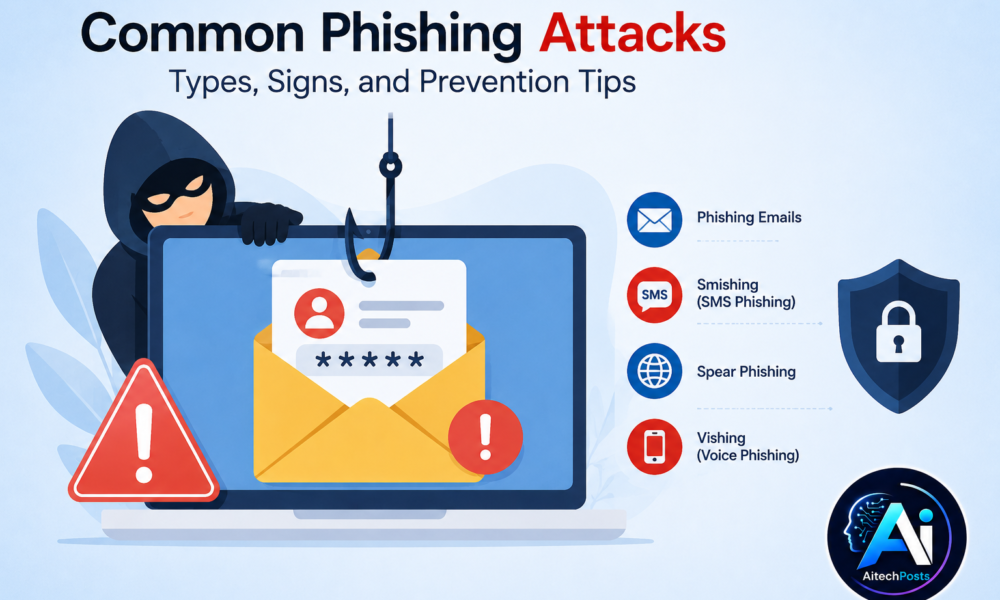
There are several types of phishing attacks used by cybercriminals. Each method uses different techniques but follows the same goal: convincing victims to reveal information or take unsafe actions.
1. Email Phishing Attacks
Email phishing is one of the most common phishing attacks and remains widely used because email is a primary communication method for individuals and businesses.
In email phishing, attackers send fake emails designed to look like they come from trusted sources. These emails may contain harmful links, fake login pages, or infected attachments.
Common examples include:
- Fake bank security alerts
- Password reset requests
- Fake invoices
- Account suspension warnings
- Fake subscription renewal messages
Attackers often create a sense of urgency by claiming that immediate action is required.
For example, an email may warn that an account will be closed unless the user verifies information quickly. This pressure can cause people to act without carefully checking the message.
2. Spear Phishing Attacks
Spear phishing is a more targeted form of phishing where attackers customize messages for specific individuals or organizations.
Unlike general phishing emails sent to thousands of users, spear phishing focuses on a particular target.
Attackers may research information from:
- Social media profiles
- Company websites
- Professional networks
- Public records
They use this information to create highly personalized messages that appear authentic.
For example, an employee may receive an email that looks like it comes from their manager requesting confidential documents.
Because spear phishing messages are personalized, they are often more difficult to identify than regular phishing attempts.
3. Whaling Attacks
Whaling is a type of phishing attack that specifically targets high-level executives or important individuals within organizations.
The attackers usually target people who have access to valuable information, financial systems, or sensitive company data.
Examples of whaling targets include:
- Company executives
- Business owners
- Finance managers
- Department leaders
Whaling attacks often involve fake legal requests, financial transactions, or confidential business communications.
Since these targets usually have higher authority, attackers attempt to create messages that appear professional and business-related.
4. Smishing (SMS Phishing)
Smishing is phishing conducted through text messages or SMS.
In these attacks, criminals send fake messages containing malicious links or requests for personal information.
Common smishing examples include:
- Fake delivery notifications
- Banking verification messages
- Prize-winning scams
- Fake account security alerts
Many people trust text messages because they seem more personal than emails. Attackers take advantage of this trust to encourage users to click dangerous links.
5. Vishing (Voice Phishing)
Vishing involves phishing attempts through phone calls.
Attackers may pretend to be representatives from banks, government agencies, technology companies, or customer support teams.
During these calls, they may request:
- Account passwords
- Verification codes
- Banking information
- Personal identification details
Some attackers use automated voice systems to create realistic experiences.
A common tactic is creating panic by claiming that suspicious activity has been detected on an account and immediate verification is required.
6. Pharming Attacks
Pharming is a phishing technique where attackers redirect users from legitimate websites to fake websites without the user realizing it.
The fake website may look identical to the original website and collect login credentials or payment information.
Unlike traditional phishing, pharming does not always require users to click a suspicious link.
Because the fake website can appear authentic, users must carefully check website addresses and security indicators.
7. Clone Phishing Attacks
Clone phishing involves creating a copy of a legitimate email that a user may have previously received.
Attackers modify the original message by replacing links or attachments with malicious versions.
Because the email looks familiar, victims may trust it and open the harmful content.
Clone phishing is effective because it uses existing communication patterns to appear believable.
Signs of Common Phishing Attacks
Recognizing phishing attempts early can prevent serious security problems. While phishing messages can look convincing, many attacks contain warning signs.
Suspicious Sender Information
Always check the sender’s email address, phone number, or account details.
Attackers often use addresses that look similar to legitimate organizations but contain small differences.
For example, a fake domain name may replace one letter or use unusual characters.
Urgent or Threatening Messages
Many phishing attacks use emotional pressure.
Common examples include:
- “Your account will be closed today”
- “Immediate action required”
- “Your payment has failed”
- “Security alert detected”
Legitimate organizations usually provide clear communication without unnecessary pressure.
Unexpected Requests for Information
Be cautious when messages ask for sensitive details such as:
- Passwords
- Banking information
- Verification codes
- Personal identification numbers
Trusted organizations generally do not request confidential information through random emails or messages.
Suspicious Links
Phishing links often redirect users to fake websites.
Before clicking any link:
- Check the website address
- Avoid shortened links from unknown sources
- Confirm whether the message is expected
Hovering over links before opening them can help identify suspicious destinations.
Grammar and Formatting Issues
Many phishing messages contain:
- Spelling mistakes
- Poor sentence structure
- Unusual formatting
- Incorrect company logos
Although modern phishing attacks may appear more professional, these mistakes can still reveal fraudulent communication.
Unexpected Attachments
Unknown attachments may contain malware or harmful files.
Avoid opening attachments unless you are certain about their source.
How to Prevent Common Phishing Attacks
Preventing phishing requires awareness, good security practices, and careful online behavior.
1. Verify Messages Before Taking Action
Before clicking links or sharing information, confirm whether the message is genuine.
If you receive a suspicious message from a company:
- Visit the official website directly
- Contact customer support using verified contact details
- Avoid using links provided in unexpected messages
2. Use Multi-Factor Authentication
Multi-factor authentication adds a security layer beyond passwords.
Even if attackers steal login credentials, they may still be unable to access accounts without the second verification step.
Using multi-factor authentication is especially important for:
- Email accounts
- Banking services
- Business systems
- Social media platforms
3. Keep Software Updated
Regular software updates help protect devices from security weaknesses.
Always update:
- Operating systems
- Web browsers
- Security applications
- Mobile applications
Attackers often exploit outdated software to gain unauthorized access.
4. Use Strong and Unique Passwords
Using the same password across multiple accounts increases risk.
Create strong passwords that include:
- Different characters
- Numbers
- Symbols
- Unique combinations
A password manager can help securely store multiple passwords.
5. Install Security Protection Tools
Security software can help detect suspicious activities, malicious websites, and harmful files.
Although security tools cannot prevent every phishing attack, they provide an additional layer of protection.
6. Educate Yourself and Others
Awareness is one of the strongest defenses against phishing.
Individuals and organizations should regularly learn about:
- New phishing techniques
- Common warning signs
- Safe online practices
Businesses should provide cybersecurity training to employees because human awareness plays a major role in preventing attacks.
How Businesses Can Protect Against Phishing Attacks
Organizations face significant risks from phishing because attackers often target employees to access company systems.
Businesses should implement:
- Employee cybersecurity training
- Email filtering systems
- Multi-factor authentication
- Access controls
- Regular security assessments
- Incident response plans
Creating a security-focused culture helps employees recognize and report suspicious activities.
What To Do If You Become a Victim of a Phishing Attack
If you accidentally interact with a phishing message, take immediate action.
Recommended steps include:
- Change affected passwords immediately
- Enable multi-factor authentication
- Contact your bank or service provider if financial information was shared
- Scan your device for malware
- Report the phishing attempt
- Monitor accounts for suspicious activity
Quick action can reduce potential damage.
The Future of Phishing Attacks
As technology improves, phishing attacks are also becoming more sophisticated.
Attackers increasingly use:
- Artificial intelligence tools
- Automated campaigns
- Personalized messages
- Advanced social engineering techniques
Future phishing attacks may become harder to recognize, making cybersecurity awareness more important than ever.
Users must continue learning about new threats and maintain safe online habits.
Frequently Asked Questions About Common Phishing Attacks
Q1: What are the most common phishing attacks?
A: The most common phishing attacks include email phishing, spear phishing, smishing, vishing, whaling, pharming, and clone phishing.
Q2: How can I identify a phishing attack?
A: You can identify phishing attacks by checking for suspicious senders, urgent requests, unexpected links, unusual attachments, and requests for sensitive information.
Q3: Are phishing attacks only sent through email?
A: No. Phishing attacks can happen through emails, text messages, phone calls, social media platforms, and fake websites.
Q4: Can antivirus software prevent phishing attacks?
A: Security software can help detect some phishing threats, but user awareness and careful online behavior are still essential.
Q5: Why are phishing attacks successful?
A: Phishing attacks succeed because they manipulate human emotions such as trust, urgency, curiosity, and fear.
Conclusion
Common phishing attacks continue to be one of the most serious cybersecurity threats because they target human behavior rather than only technical weaknesses. From email phishing and spear phishing to smishing and vishing, attackers use different methods to steal information and compromise accounts.
Understanding the signs of phishing attacks and following proper prevention practices can significantly reduce risks. Verifying messages, using strong security measures, enabling multi-factor authentication, and staying informed are essential steps for protecting personal and business information.
As cyber threats continue to evolve, awareness remains one of the most powerful tools for staying safe in the digital world.









No Comment! Be the first one.